How can we redesign productive ecosystems for the desert?
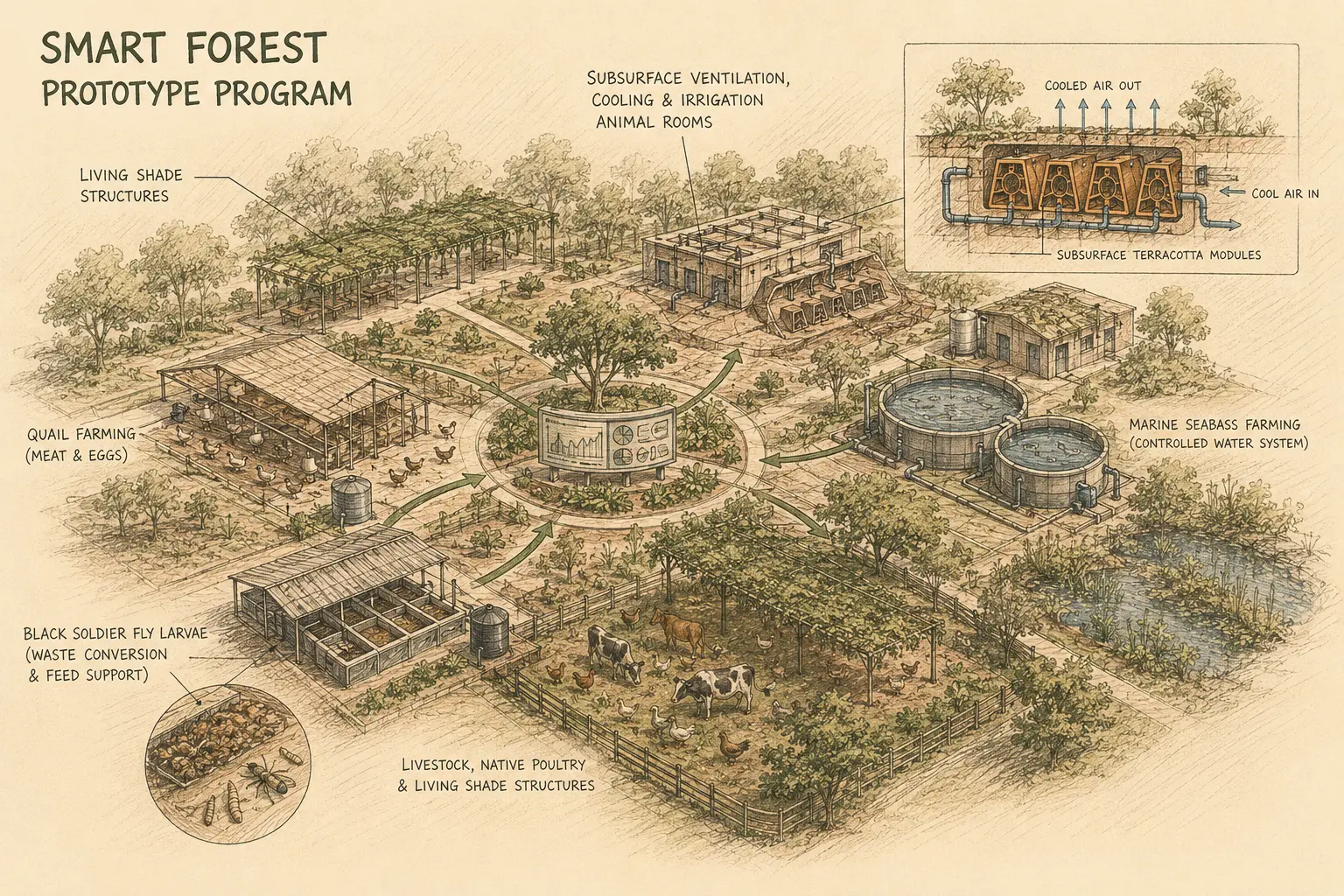
Agrith is not one farming method. It is an evolving field model that connects trees, biomass, animals, insects, aquaculture, water, cooling, waste and operational data.
Prototype stageBuilding, measuring and connecting systems before scale.
01 A productive landscape designed as one operating system.
Desert constraints / 02
The desert exposes every weak link.
Conventional systems often treat climate, water and feed as separate expenses. In the field, each one changes the others.
45°+
Heat
Roots, animals, water and equipment all operate under thermal stress.
↓
Water
Every litre must support biology without becoming unnecessary loss.
↗
Feed
Imported inputs make food production more exposed to cost and supply changes.
03 System logic
Do not optimise the parts. Connect the living system.
WaterTemperatureSoilTreesBiomassAnimalsInsectsWasteFoodDataAGRITHMeasured loops in one field
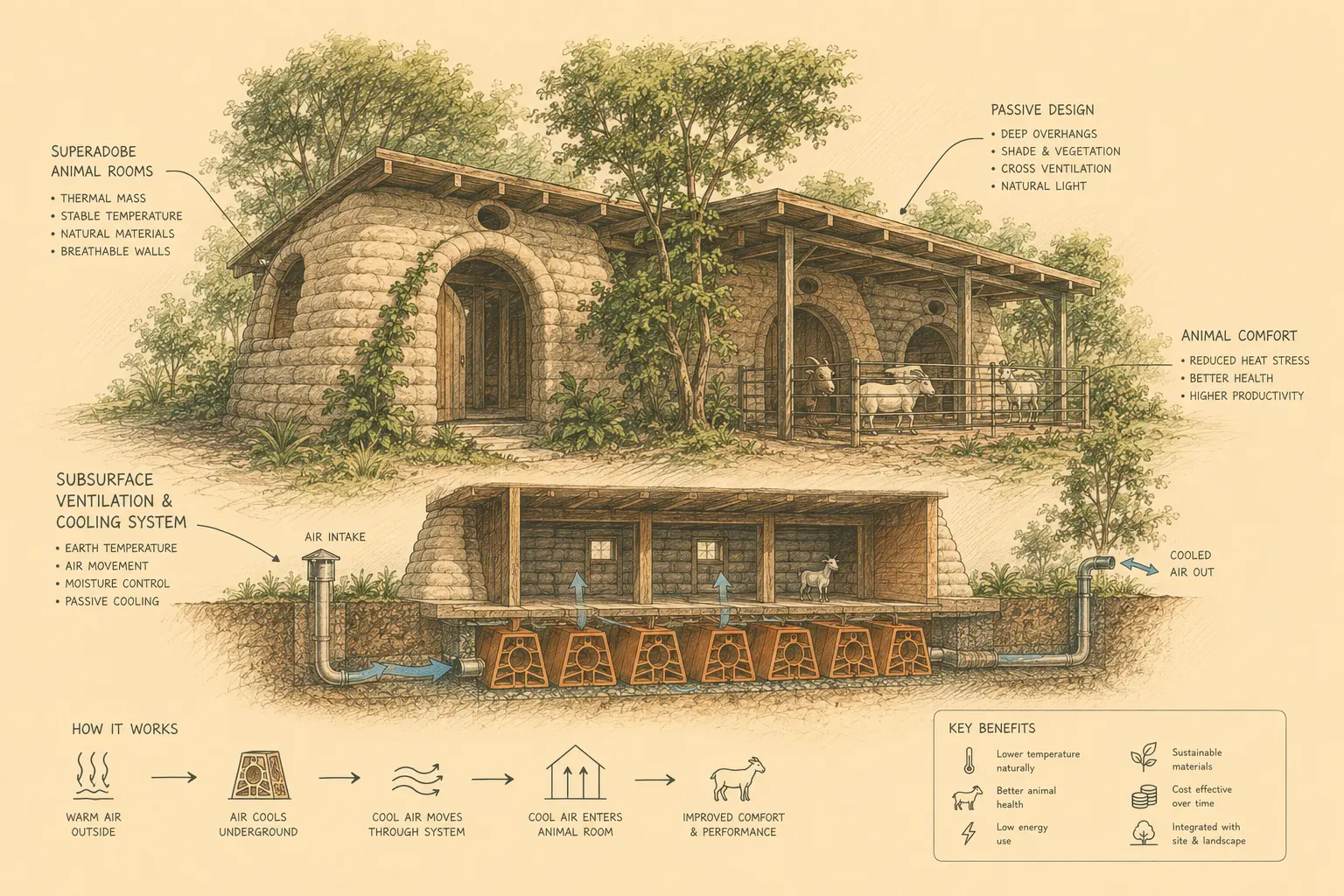
Subsurface thermal management can support roots, animals and protected spaces.
04 Territh × Agrith
Climate control becomes part of the ecosystem.
Territh-style subsurface cooling, ventilation and irrigation connect environmental engineering to the biological system instead of sitting beside it as an isolated machine.
01Moderate heat before it reaches the productive space.
02Support root zones and animal environments with measured conditions.
03Use sensor data to compare concepts with field reality.
Each track must produce useful evidence on its own—and better decisions when connected to the others.
01Tree layer
Moringa & forest biomass
Test productive shade, biomass growth and feed-allocation scenarios around a desert-adapted forest core.
Measure: Growth · shade · biomass
06 Circular hypotheses
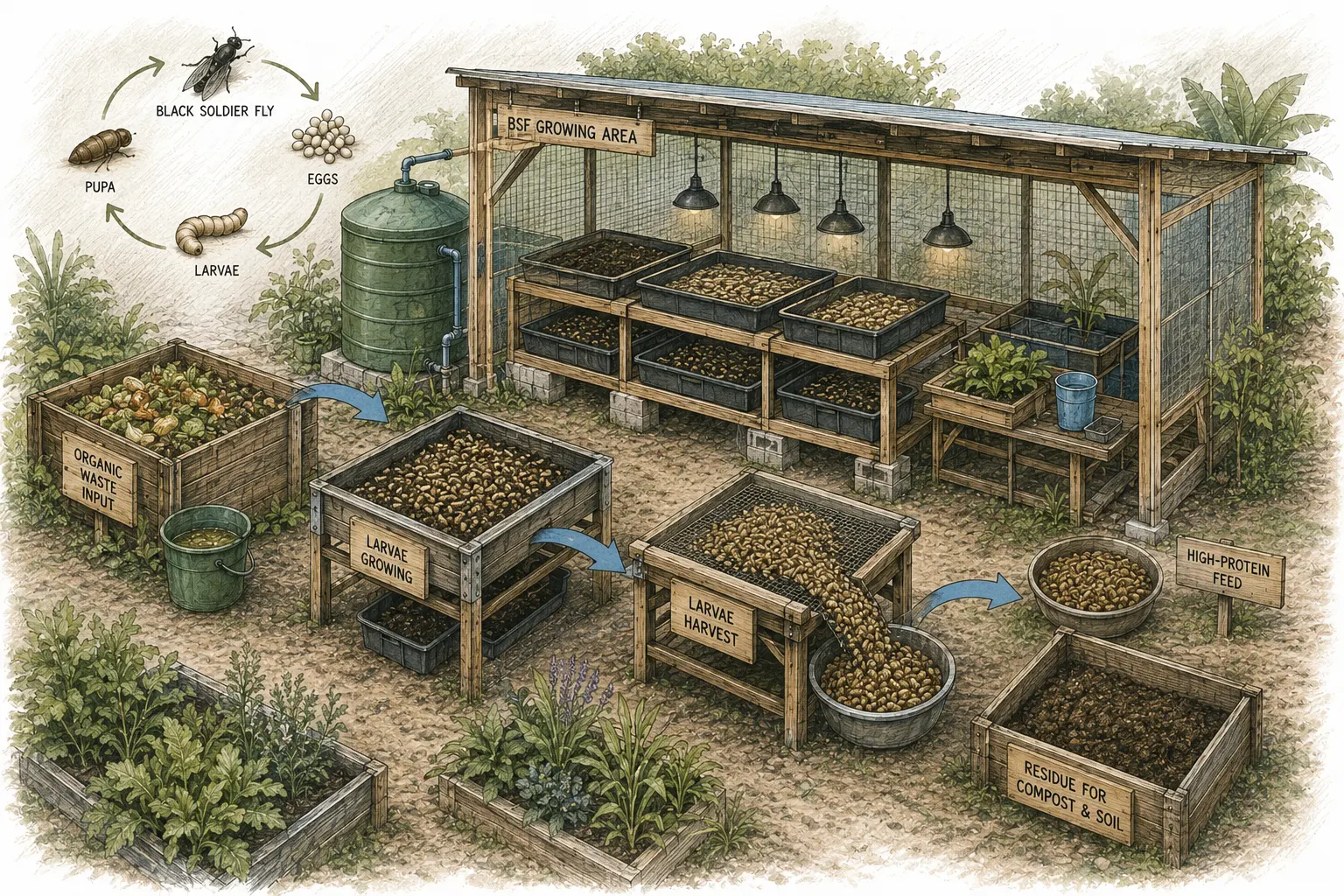
Waste is not a result. It is another input to test.
The value of a circular model is not the diagram. It is proving which exchanges remain biologically sound, operationally practical and economically useful.
NextConnected modelShared inputs, outputs and operating data.
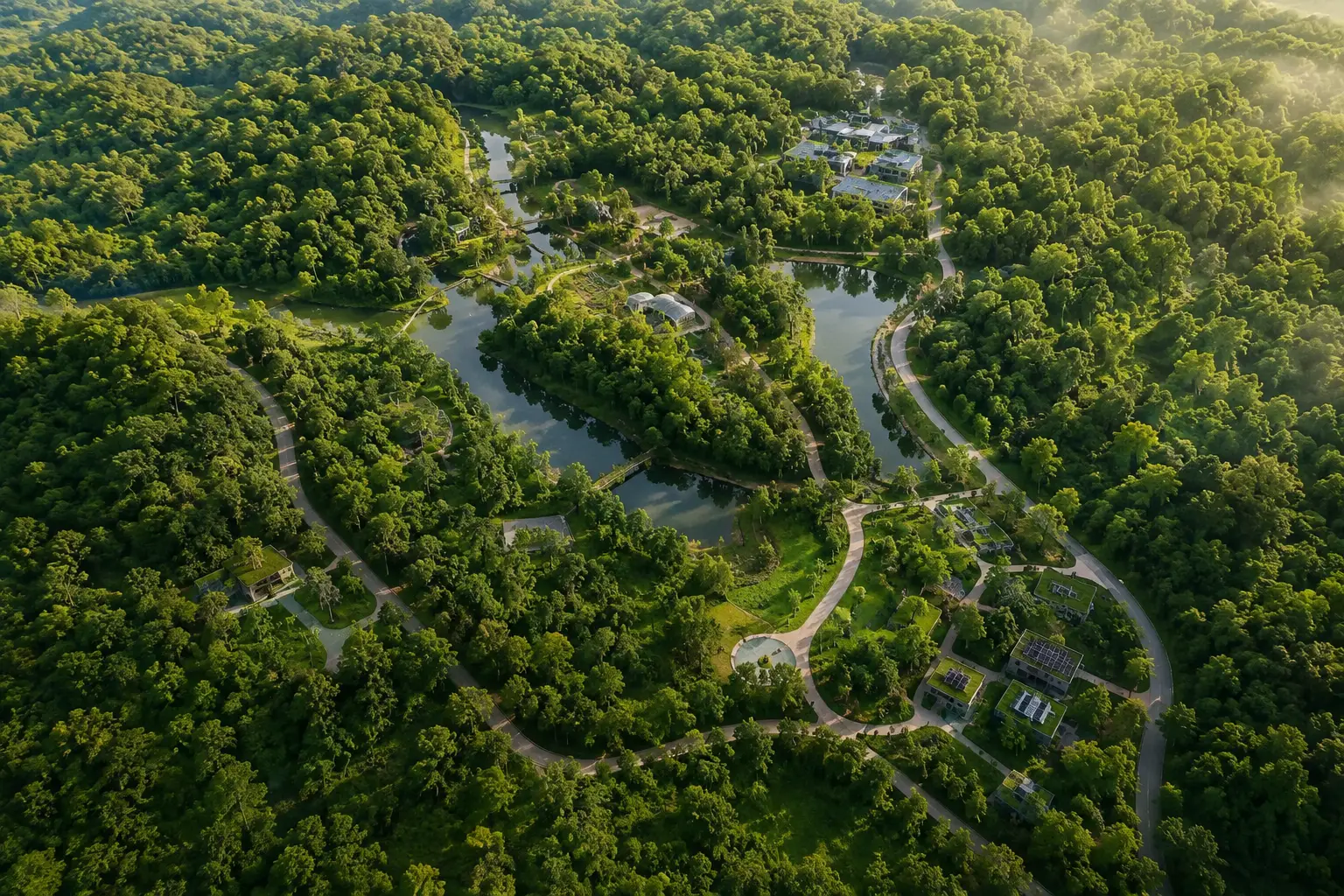
VisionSmart Forest ParkFood, environment, research and learning at landscape scale.
08 Planning tool
Feed & farm economics.
Compare a conventional monthly baseline with a user-defined Moringa and Black Soldier Fly replacement scenario. No feed coefficient is assumed for you.