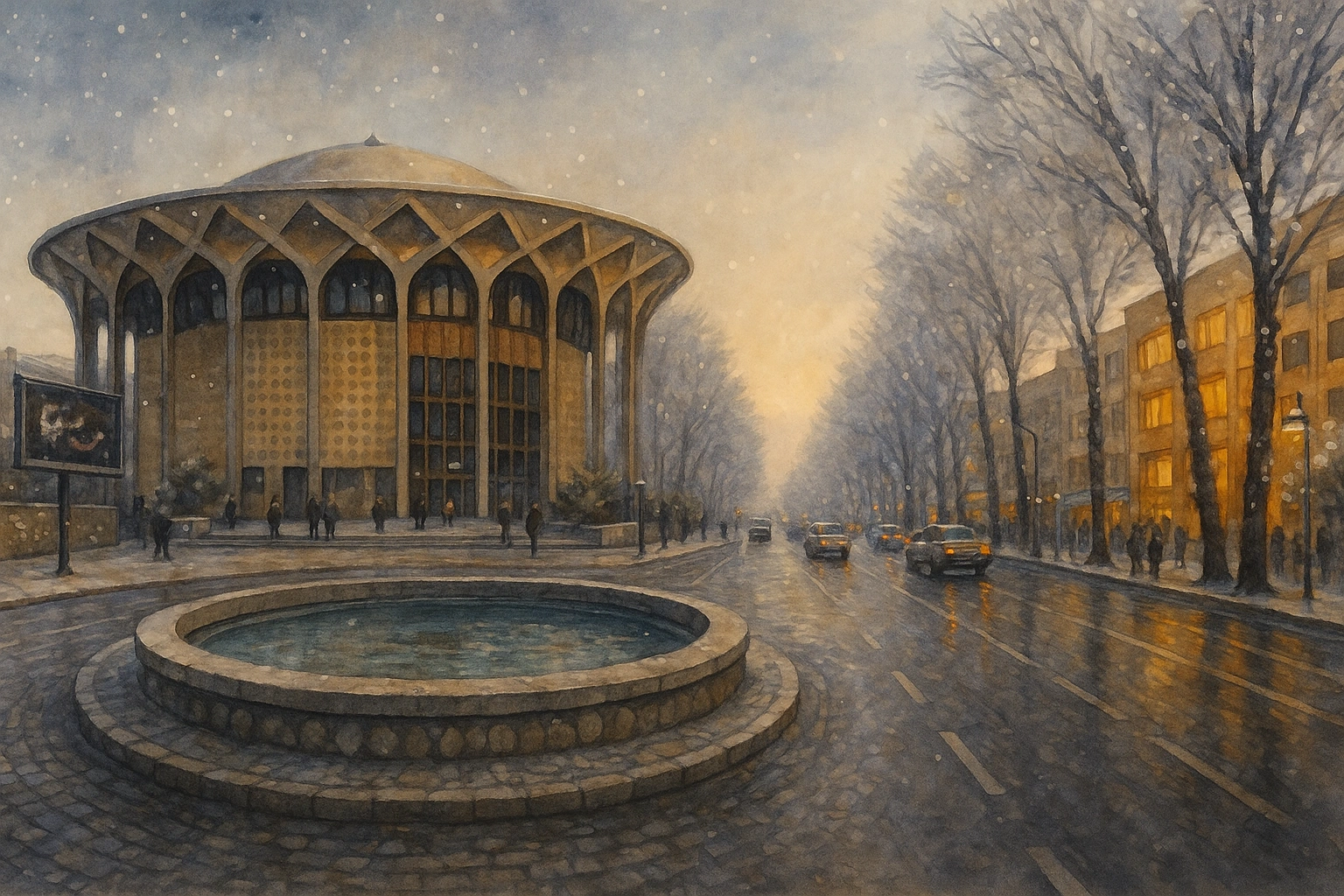
These days, as the dust of war settles over the sky of my homeland, many ask: 'Why are you silent? Why don't you defend the government now that a foreign country has attacked?' My answer is a story. A story that shows if you haven't fallen victim to Stockholm syndrome, you cannot stand behind this regime.To understand this answer, you must return with me to mid 2006. To Azadi Street, near Enghelab Square.
I was nineteen young and naïve, but thirsty for truth. My mind was a battlefield between inherited beliefs and emerging doubts. A year earlier, the idea of 'separating religion from politics' was a red line even thinking about it felt sinful. But now, secularism had become a window into a world I longed to understand. Still, I was seeking spirituality just with a different flavor.
That new flavor I had found in Seyed Hossein Kazemeyni Boroujerdi a cleric who spoke of mysticism while being a secularist. A combination I no longer believe in today, but back then, it was a grand gateway to a new world. A few new friends decent, kind people led me down this path. But this new way wasn't the peaceful spiritual journey I had imagined. It was a road of struggle in the heart of an Iran gasping under the grip of an ideological regime.
There was no high-speed internet yet. The internet had only the sweet scent of dial-up. In that foggy atmosphere, I was intoxicated by finding a new path to satisfy my curious soul. The dopamine flooding my brain gave me an illusion of courage, making me fearless. And fearlessness was exactly what that circle required. Not a day passed without hearing about the arrest of one of Kazemeyni's followers, and I, as a young man, was sinking deeper into this whirlpool. I no longer saw myself as a seeker of truth, but as a fighter. A simple minded hero who thought he could save his country from tyranny. Oblivious to the fact that this regime wasn't here to leave.
And finally, the fated day arrived. The government had escalated its pressure: this 'propaganda' had to be dismantled. I was so deep in the illusion of struggle that I went home, stood before my mother and sister in law who were there, and said:
'I'm going. You likely won't see me again. We'll meet in the afterlife.'
My mother, crying and begging, tried to stop me. She couldn't.
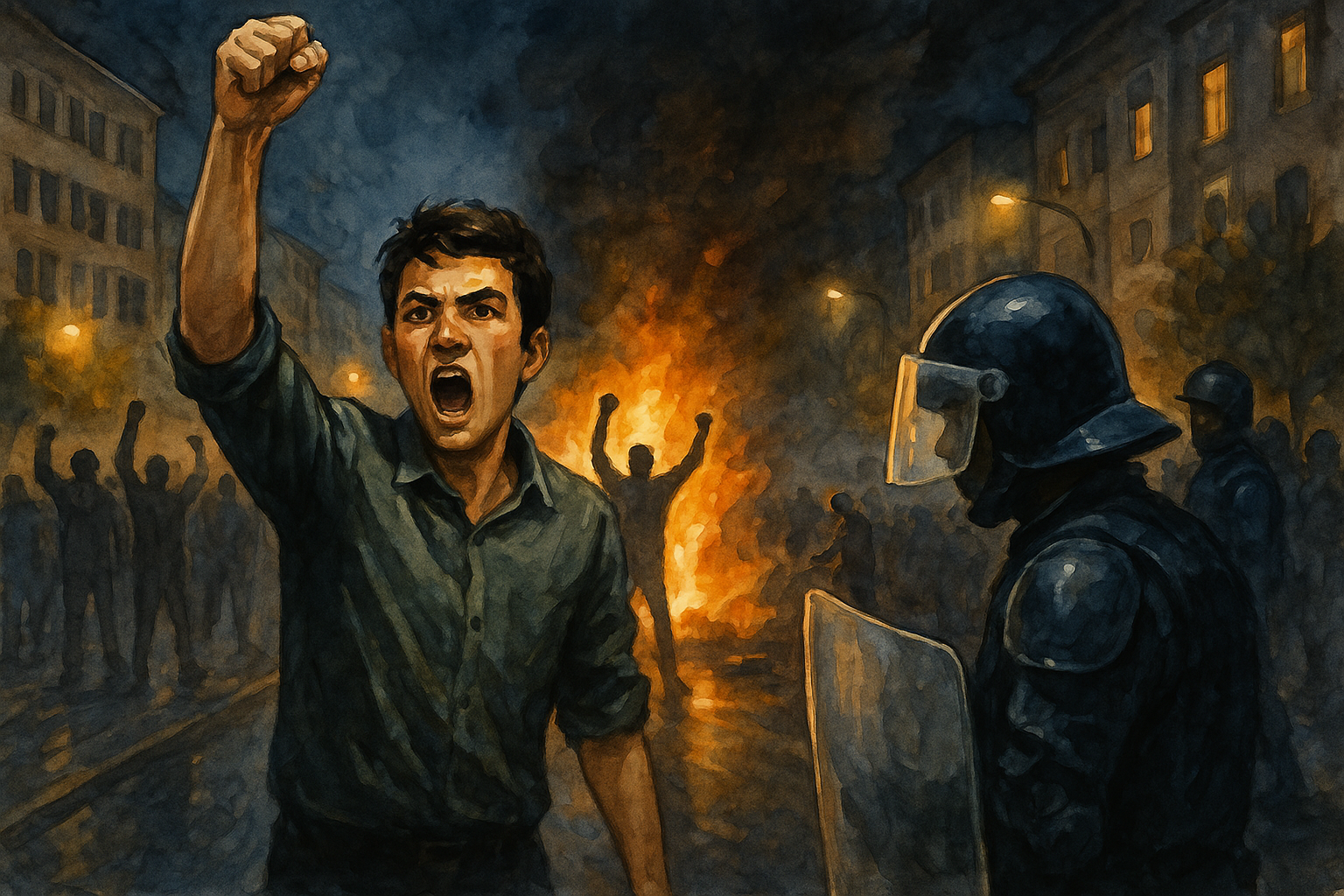
I went to Boroujerdi's house. The alley had turned into something like a strategic war trench. After a day of street clashes with the authorities, that damned night arrived.
We were around two thousand people, armed to the teeth with rebar and scrap metal. Naively, we thought we might win but we were also ready to die.
Until late at night, we fought off Basij forces who attacked with rocks and sticks. When they failed to push us back, it was time for the Special Forces. Tehran's police chief stepped forward and offered a deal:
'Surrender your weapons and no one will be arrested.'
Kazemeyni accepted. We, in our innocence, surrendered everything.
We had been tricked.
As soon as we were disarmed, the order came: everyone must be arrested.
But that police commander, who didn't sell his honor for his position, refused to carry out the order he had given his word. Right there, in the middle of the battlefield, he was dismissed. His replacement, drunk on power, ordered a full-scale assault.
We were defenseless. The fires we had lit to neutralize tear gas were going out, one by one. The Special Forces stormed in. Everyone fled in every direction. Some neighbors opened their doors and offered shelter. But many, in the surrounding alleys, got caught in 'human tunnels' the officers had formed beaten with batons and herded toward arrest buses.
Around fifty of us took refuge in Boroujerdi's yard he and his family were there too. First, a water cannon truck attacked us with tank level pressure. Then a Hilux smashed the gate. Forces with only their eyes visible through masks poured in, followed by Basijis shouting slogans. Like a live trap, they caught people one by one and dragged them through the beating tunnel.
So much tear gas was fired that breathing became impossible. About twenty of us rushed into the house some girls, some boys. Once inside, they stopped the tear gas to prevent us from lighting a fire, but instead filled the air with pepper gas canisters and a horrific vomit inducing gas. I can't remember how many but it felt like your lungs were melting.
Then the door broke, and terror stormed in. Gunfire echoed in the gas filled room, shattering eardrums. I saw people fall before my eyes. You cannot imagine what it feels like to see someone shot from one meter away. I hope you never do.
When death stands that close, the entire world fades away.
Among us, a few incredibly brave souls disarmed an officer and held a knife to his throat.
But the commander yelled:
'Kazemeyni! I'm counting to ten. If they don't surrender, I'll kill them all in front of you.'
Kazemeyni told them to surrender.
They carried horrific tools short rods attached to long springs, ending in a metal weight. With these, they struck kids on the head like a sledgehammer, arresting them drenched in blood.
A dining table stood in the middle of the room.
Kazemeyni, with two men and two girls who shielded him, stood on one side.
I, the last person on the other side, in utter panic, leapt over the table and clung to his arm thinking these were my last moments on earth.
They dragged the two girls I knew one of them and beat them as hard as they could.
Then came the last man shielding him beaten to the point I don't know if he survived.
Finally, they grabbed Kazemeyni himself. Their mission complete, they encircled him and forced him to sit. Everyone who passed landed a blow. One pulled his beard so hard that a chunk of skin came off, spraying blood.
One of them hit me on the back with a baton. Amid the chaos, I snatched it from him and was pulled outside by the crowd. Among Iran's security forces, there's a group called 'plainclothesmen.' That night, luck was on my side. I had fasted for forty days, was emaciated, my clothes soaked in blood they mistook me for one of them.
They were so intoxicated by Kazemeyni's capture they didn't notice me.
They shoved him into a car, and the others danced atop the vehicle in religious triumph a victory dance.
Now came the time to clean the scene. Everything had to appear normal before dawn.
I had just witnessed Kazemeyni's arrest, had just escaped death by inches, and slowly made my way toward the main street. I passed the first two security rings, thanks to scattered skirmishes. I just walked and walked.
At the intersection with the main road, someone beside an ambulance said:
'Your leg is bleeding.'
That's when I realized I had been shot. I just said:
'There are too many wounded here help them,' and kept moving toward the last Special Forces line.
As I reached the final row, someone asked a soldier a question.
When the soldier turned to answer, I slipped past.
I had escaped.
My motorcycle was nearby, but I didn't approach I knew I'd be arrested.
So I started walking.
A bit further past Enghelab Square, I found a screwdriver on the ground.
I hid it in my sleeve in case someone stopped me in the lonely dawn I didn't want to be defenseless.
I barely made it home.
I found out my parents had searched the streets all night for me.
When I got in the shower and dropped my clothes in a tub, the next day, the clothes had dissolved like they'd been soaked in acid.
For three months, I could barely speak from the chemical gas exposure.
I thought I had lost my voice forever.
Even now, whenever I hear a sudden loud sound, the gunfire from that night rings in my ears, and panic overtakes me.
I'll never forget the Special Forces commander's shout:
'You think we're like SAVAK, letting you go? We'll kill every last one of you.'
Now, even though I no longer hold those religious beliefs or the worldview of that era, this story of mine alongside thousands of similar narratives, thousands of deaths, and thousands of executions stands as its own undeniable testament. So, should I shield such a government? Now that someone more powerful has come head-to-head with it, should I be worried about its survival?
I pulled myself out from under the rubble of my homeland's history years ago
but I will never forget that night.
My final word is for those who still think there's a way to compromise with this system:
There isn't.
Death comes once. Mourning comes once.
Let this nightmare end.
No one knows exactly what tomorrow holds,
but I promise you
it won't be worse than this.

 01
01